•  
Satellite View of Shark Bay UNESCO World Heritage Site - Australia

Satellite View of Shark Bay UNESCO World Heritage Site - Australia

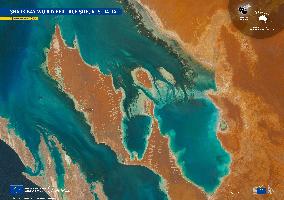
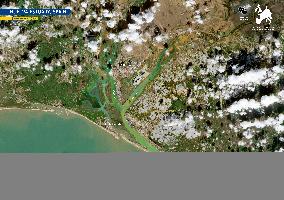
Handout satellite view, dated on November 26, 2025, shows the Shark Bay UNESCO World Heritage Site. Shark Bay, located on the western coast of Australia, is a UNESCO World Heritage Site renowned for its exceptional natural beauty, including unique marine biodiversity and one of the world's most extensive seagrass beds. The site is globally significant for its ecological processes, geological formations, and as a habitat for threatened species such as dugongs and green turtles. These fragile ecosystems are highly sensitive to changes in water quality, sea temperature, and coastal development. This Copernicus Sentinel-2 image, acquired on 26 November 2025, shows the striking coastal and marine features of Shark Bay in high resolution. The contrasting colours reveal shallow sandbanks, seagrass meadows, and hypersaline basins, as well as the arid terrestrial surroundings near Denham. Photo by European Union, Copernicus Sentinel-2 imagery via ABACAPRESS.COM

  •  
Visit to the works of the Galindo Storm Tank - Barakaldo

Visit to the works of the Galindo Storm Tank - Barakaldo

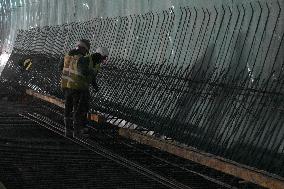
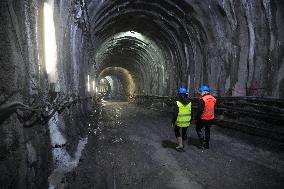
Several people work during a visit to the construction site of the Galindo Storm Tank, December 5, 2025, in Barakaldo, Biscay, Basque Country, Spain. The subway hydraulic infrastructure is designed to store excess rainwater to prevent untreated wastewater from reaching rivers, reducing flooding and improving water quality. The project has an investment of more than 46 million euros and is scheduled for completion by the end of 2027. Photo by H.Bilbao / Europa Press/ABACAPRESS.COM

  •  
Visit to the works of the Galindo Storm Tank - Barakaldo

Visit to the works of the Galindo Storm Tank - Barakaldo

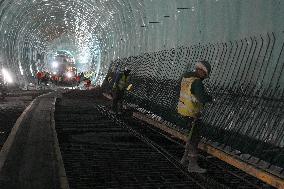
Several people work during a visit to the construction site of the Galindo Storm Tank, December 5, 2025, in Barakaldo, Biscay, Basque Country, Spain. The subway hydraulic infrastructure is designed to store excess rainwater to prevent untreated wastewater from reaching rivers, reducing flooding and improving water quality. The project has an investment of more than 46 million euros and is scheduled for completion by the end of 2027. Photo by H.Bilbao / Europa Press/ABACAPRESS.COM

  •  
Visit to the works of the Galindo Storm Tank - Barakaldo

Visit to the works of the Galindo Storm Tank - Barakaldo

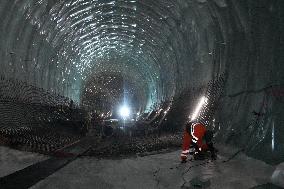
Several people work during a visit to the construction site of the Galindo Storm Tank, December 5, 2025, in Barakaldo, Biscay, Basque Country, Spain. The subway hydraulic infrastructure is designed to store excess rainwater to prevent untreated wastewater from reaching rivers, reducing flooding and improving water quality. The project has an investment of more than 46 million euros and is scheduled for completion by the end of 2027. Photo by H.Bilbao / Europa Press/ABACAPRESS.COM

  •  
Visit to the works of the Galindo Storm Tank - Barakaldo

Visit to the works of the Galindo Storm Tank - Barakaldo

Several people work during a visit to the construction site of the Galindo Storm Tank, December 5, 2025, in Barakaldo, Biscay, Basque Country, Spain. The subway hydraulic infrastructure is designed to store excess rainwater to prevent untreated wastewater from reaching rivers, reducing flooding and improving water quality. The project has an investment of more than 46 million euros and is scheduled for completion by the end of 2027. Photo by H.Bilbao / Europa Press/ABACAPRESS.COM

  •  
Visit to the works of the Galindo Storm Tank - Barakaldo

Visit to the works of the Galindo Storm Tank - Barakaldo

Several people work during a visit to the construction site of the Galindo Storm Tank, December 5, 2025, in Barakaldo, Biscay, Basque Country, Spain. The subway hydraulic infrastructure is designed to store excess rainwater to prevent untreated wastewater from reaching rivers, reducing flooding and improving water quality. The project has an investment of more than 46 million euros and is scheduled for completion by the end of 2027. Photo by H.Bilbao / Europa Press/ABACAPRESS.COM

  •  
Visit to the works of the Galindo Storm Tank - Barakaldo

Visit to the works of the Galindo Storm Tank - Barakaldo

Several people work during a visit to the construction site of the Galindo Storm Tank, December 5, 2025, in Barakaldo, Biscay, Basque Country, Spain. The subway hydraulic infrastructure is designed to store excess rainwater to prevent untreated wastewater from reaching rivers, reducing flooding and improving water quality. The project has an investment of more than 46 million euros and is scheduled for completion by the end of 2027. Photo by H.Bilbao / Europa Press/ABACAPRESS.COM

  •  
Visit to the works of the Galindo Storm Tank - Barakaldo

Visit to the works of the Galindo Storm Tank - Barakaldo

Several people work during a visit to the construction site of the Galindo Storm Tank, December 5, 2025, in Barakaldo, Biscay, Basque Country, Spain. The subway hydraulic infrastructure is designed to store excess rainwater to prevent untreated wastewater from reaching rivers, reducing flooding and improving water quality. The project has an investment of more than 46 million euros and is scheduled for completion by the end of 2027. Photo by H.Bilbao / Europa Press/ABACAPRESS.COM

  •  
Visit to the works of the Galindo Storm Tank - Barakaldo

Visit to the works of the Galindo Storm Tank - Barakaldo

Several people work during a visit to the construction site of the Galindo Storm Tank, December 5, 2025, in Barakaldo, Biscay, Basque Country, Spain. The subway hydraulic infrastructure is designed to store excess rainwater to prevent untreated wastewater from reaching rivers, reducing flooding and improving water quality. The project has an investment of more than 46 million euros and is scheduled for completion by the end of 2027. Photo by H.Bilbao / Europa Press/ABACAPRESS.COM

  •  
Visit to the works of the Galindo Storm Tank - Barakaldo

Visit to the works of the Galindo Storm Tank - Barakaldo

Several people work during a visit to the construction site of the Galindo Storm Tank, December 5, 2025, in Barakaldo, Biscay, Basque Country, Spain. The subway hydraulic infrastructure is designed to store excess rainwater to prevent untreated wastewater from reaching rivers, reducing flooding and improving water quality. The project has an investment of more than 46 million euros and is scheduled for completion by the end of 2027. Photo by H.Bilbao / Europa Press/ABACAPRESS.COM

  •  
Visit to the works of the Galindo Storm Tank - Barakaldo

Visit to the works of the Galindo Storm Tank - Barakaldo

Several people work during a visit to the construction site of the Galindo Storm Tank, December 5, 2025, in Barakaldo, Biscay, Basque Country, Spain. The subway hydraulic infrastructure is designed to store excess rainwater to prevent untreated wastewater from reaching rivers, reducing flooding and improving water quality. The project has an investment of more than 46 million euros and is scheduled for completion by the end of 2027. Photo by H.Bilbao / Europa Press/ABACAPRESS.COM

  •  
Visit to the works of the Galindo Storm Tank - Barakaldo

Visit to the works of the Galindo Storm Tank - Barakaldo

Several people work during a visit to the construction site of the Galindo Storm Tank, December 5, 2025, in Barakaldo, Biscay, Basque Country, Spain. The subway hydraulic infrastructure is designed to store excess rainwater to prevent untreated wastewater from reaching rivers, reducing flooding and improving water quality. The project has an investment of more than 46 million euros and is scheduled for completion by the end of 2027. Photo by H.Bilbao / Europa Press/ABACAPRESS.COM

  •  
Visit to the works of the Galindo Storm Tank - Barakaldo

Visit to the works of the Galindo Storm Tank - Barakaldo

Several people work during a visit to the construction site of the Galindo Storm Tank, December 5, 2025, in Barakaldo, Biscay, Basque Country, Spain. The subway hydraulic infrastructure is designed to store excess rainwater to prevent untreated wastewater from reaching rivers, reducing flooding and improving water quality. The project has an investment of more than 46 million euros and is scheduled for completion by the end of 2027. Photo by H.Bilbao / Europa Press/ABACAPRESS.COM

  •  
Visit to the works of the Galindo Storm Tank - Barakaldo

Visit to the works of the Galindo Storm Tank - Barakaldo

Several people work during a visit to the construction site of the Galindo Storm Tank, December 5, 2025, in Barakaldo, Biscay, Basque Country, Spain. The subway hydraulic infrastructure is designed to store excess rainwater to prevent untreated wastewater from reaching rivers, reducing flooding and improving water quality. The project has an investment of more than 46 million euros and is scheduled for completion by the end of 2027. Photo by H.Bilbao / Europa Press/ABACAPRESS.COM

  •  
Visit to the works of the Galindo Storm Tank - Barakaldo

Visit to the works of the Galindo Storm Tank - Barakaldo

Several people work during a visit to the construction site of the Galindo Storm Tank, December 5, 2025, in Barakaldo, Biscay, Basque Country, Spain. The subway hydraulic infrastructure is designed to store excess rainwater to prevent untreated wastewater from reaching rivers, reducing flooding and improving water quality. The project has an investment of more than 46 million euros and is scheduled for completion by the end of 2027. Photo by H.Bilbao / Europa Press/ABACAPRESS.COM

  •  
Visit to the works of the Galindo Storm Tank - Barakaldo

Visit to the works of the Galindo Storm Tank - Barakaldo

Several people work during a visit to the construction site of the Galindo Storm Tank, December 5, 2025, in Barakaldo, Biscay, Basque Country, Spain. The subway hydraulic infrastructure is designed to store excess rainwater to prevent untreated wastewater from reaching rivers, reducing flooding and improving water quality. The project has an investment of more than 46 million euros and is scheduled for completion by the end of 2027. Photo by H.Bilbao / Europa Press/ABACAPRESS.COM

  •  
Visit to the works of the Galindo Storm Tank - Barakaldo

Visit to the works of the Galindo Storm Tank - Barakaldo

Several people work during a visit to the construction site of the Galindo Storm Tank, December 5, 2025, in Barakaldo, Biscay, Basque Country, Spain. The subway hydraulic infrastructure is designed to store excess rainwater to prevent untreated wastewater from reaching rivers, reducing flooding and improving water quality. The project has an investment of more than 46 million euros and is scheduled for completion by the end of 2027. Photo by H.Bilbao / Europa Press/ABACAPRESS.COM

  •  
Visit to the works of the Galindo Storm Tank - Barakaldo

Visit to the works of the Galindo Storm Tank - Barakaldo

Several people work during a visit to the construction site of the Galindo Storm Tank, December 5, 2025, in Barakaldo, Biscay, Basque Country, Spain. The subway hydraulic infrastructure is designed to store excess rainwater to prevent untreated wastewater from reaching rivers, reducing flooding and improving water quality. The project has an investment of more than 46 million euros and is scheduled for completion by the end of 2027. Photo by H.Bilbao / Europa Press/ABACAPRESS.COM

  •  
Huelva Estuary in Spain

Huelva Estuary in Spain

Handout photo dated on November 16, 2025 shows Huelva Estuary in Spain. On 16 November 2025, one of the Copernicus Sentinel-2 satellites acquired this image of the Huelva estuary in south-western Spain, where the Tinto and Odiel rivers converge before flowing into the Atlantic Ocean. Recent rainfall has increased surface runoff and sediment transport, strengthening the contrasting outflow from the two rivers. The image shows distinct colour variations produced by differences in water chemistry and suspended materials. As these waters mix with tidal currents, they create gradual transitions and clearly defined plumes, highlighting the estuary’s dynamic behaviour. Copernicus Sentinel satellite data enables continuous monitoring of river plumes, estuarine dynamics, and land-sea interactions. This information is important for assessing the environmental impact of sediment transport, supporting water quality monitoring, and informing coastal zone management in fragile ecosystems. Photo by European Union, Copernicu

  •  
Magnificent Milky Way Scenery - China

Magnificent Milky Way Scenery - China

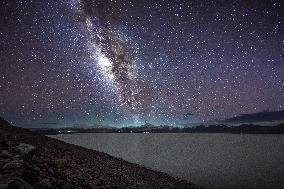
This photo taken on August 14, 2025 shows the Milky Way above Baiku Co in Xigaze City, southwest China's Xizang Autonomous Region. Baiku Co, with a water area of approximately 300 square kilometers, has its lake surface at an altitude of 4,590 meters. Thanks to the excellent air quality on the plateau, the Milky Way is clearly visible in the starry sky at the end of summer and the beginning of autumn, forming a magnificent scene together with the lake and snow-capped mountains. Photo by Ma Lichao/Xinhua/ABACAPRESS.COM

  •  
Magnificent Milky Way Scenery - China

Magnificent Milky Way Scenery - China

This photo taken on August 14, 2025 shows the Milky Way and a meteor shower above Baiku Co in Xigaze City, southwest China's Xizang Autonomous Region. Baiku Co, with a water area of approximately 300 square kilometers, has its lake surface at an altitude of 4,590 meters. Thanks to the excellent air quality on the plateau, the Milky Way is clearly visible in the starry sky at the end of summer and the beginning of autumn, forming a magnificent scene together with the lake and snow-capped mountains. Photo by Ma Lichao/Xinhua/ABACAPRESS.COM

  •  
Magnificent Milky Way Scenery - China

Magnificent Milky Way Scenery - China

This photo taken on August 14, 2025 shows the Milky Way above Baiku Co in Xigaze City, southwest China's Xizang Autonomous Region. Baiku Co, with a water area of approximately 300 square kilometers, has its lake surface at an altitude of 4,590 meters. Thanks to the excellent air quality on the plateau, the Milky Way is clearly visible in the starry sky at the end of summer and the beginning of autumn, forming a magnificent scene together with the lake and snow-capped mountains. Photo by Ma Lichao/Xinhua/ABACAPRESS.COM

  •  
Magnificent Milky Way Scenery - China

Magnificent Milky Way Scenery - China

This photo taken on August 14, 2025 shows the Milky Way above Baiku Co in Xigaze City, southwest China's Xizang Autonomous Region. Baiku Co, with a water area of approximately 300 square kilometers, has its lake surface at an altitude of 4,590 meters. Thanks to the excellent air quality on the plateau, the Milky Way is clearly visible in the starry sky at the end of summer and the beginning of autumn, forming a magnificent scene together with the lake and snow-capped mountains. Photo by Ma Lichao/Xinhua/ABACAPRESS.COM

  •  
Sanitation Robots Cleaning Beijing - China

Sanitation Robots Cleaning Beijing - China

A robotic cleaner works at a business district along the Grand Canal in Tongzhou District of Beijing, capital of China, August 16, 2025. Connecting Beijing and Hangzhou in east China's Zhejiang Province, the Grand Canal is the world's longest artificial waterway. In recent years, Beijing has implemented an array of measures in the protection of the environment in and along the Grand Canal, which has lead to improved water quality, restored biodiversity as well as enhanced vegetation coverage. Photo by Li Xin

  •  
Crab Farming

Crab Farming

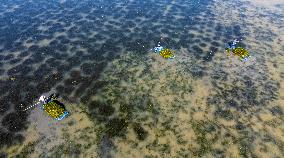
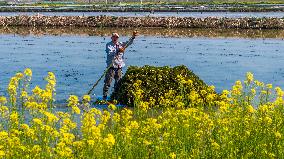
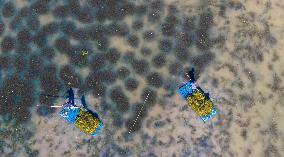
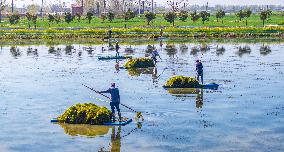
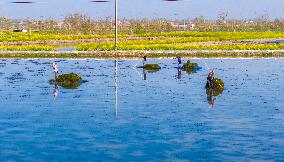
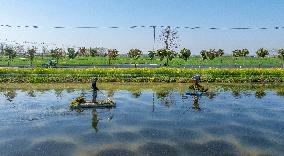
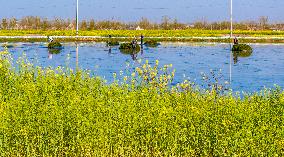
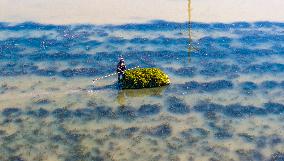
HUAI'AN, CHINA - APRIL 6, 2025 - Crab farmers fish Elodea nuttallii for other crab farmers at the mouth of a crab pond in Huai 'an city, Jiangsu province, China on April 6, 2025. It is reported that planting Elodea nuttallii in crab ponds can purify water quality, prevent eutrophication, and provide natural nutrients and places for crabs to rest and molt their shells.

  •  
Crab Farming

Crab Farming

HUAI'AN, CHINA - APRIL 6, 2025 - Crab farmers fish Elodea nuttallii for other crab farmers at the mouth of a crab pond in Huai 'an city, Jiangsu province, China on April 6, 2025. It is reported that planting Elodea nuttallii in crab ponds can purify water quality, prevent eutrophication, and provide natural nutrients and places for crabs to rest and molt their shells.

  •  
Crab Farming

Crab Farming

HUAI'AN, CHINA - APRIL 6, 2025 - Crab farmers fish Elodea nuttallii for other crab farmers at the mouth of a crab pond in Huai 'an city, Jiangsu province, China on April 6, 2025. It is reported that planting Elodea nuttallii in crab ponds can purify water quality, prevent eutrophication, and provide natural nutrients and places for crabs to rest and molt their shells.

  •  
Crab Farming

Crab Farming

HUAI'AN, CHINA - APRIL 6, 2025 - Crab farmers fish Elodea nuttallii for other crab farmers at the mouth of a crab pond in Huai 'an city, Jiangsu province, China on April 6, 2025. It is reported that planting Elodea nuttallii in crab ponds can purify water quality, prevent eutrophication, and provide natural nutrients and places for crabs to rest and molt their shells.

  •  
Crab Farming

Crab Farming

HUAI'AN, CHINA - APRIL 6, 2025 - Crab farmers fish Elodea nuttallii for other crab farmers at the mouth of a crab pond in Huai 'an city, Jiangsu province, China on April 6, 2025. It is reported that planting Elodea nuttallii in crab ponds can purify water quality, prevent eutrophication, and provide natural nutrients and places for crabs to rest and molt their shells.

  •  
Crab Farming

Crab Farming

HUAI'AN, CHINA - APRIL 6, 2025 - Crab farmers fish Elodea nuttallii for other crab farmers at the mouth of a crab pond in Huai 'an city, Jiangsu province, China on April 6, 2025. It is reported that planting Elodea nuttallii in crab ponds can purify water quality, prevent eutrophication, and provide natural nutrients and places for crabs to rest and molt their shells.

  •  
Crab Farming

Crab Farming

HUAI'AN, CHINA - APRIL 6, 2025 - Crab farmers fish Elodea nuttallii for other crab farmers at the mouth of a crab pond in Huai 'an city, Jiangsu province, China on April 6, 2025. It is reported that planting Elodea nuttallii in crab ponds can purify water quality, prevent eutrophication, and provide natural nutrients and places for crabs to rest and molt their shells.

  •  
Crab Farming

Crab Farming

HUAI'AN, CHINA - APRIL 6, 2025 - Crab farmers fish Elodea nuttallii for other crab farmers at the mouth of a crab pond in Huai 'an city, Jiangsu province, China on April 6, 2025. It is reported that planting Elodea nuttallii in crab ponds can purify water quality, prevent eutrophication, and provide natural nutrients and places for crabs to rest and molt their shells.

  •  
Sake Making At Jozan Brewery In Fukui - Japan

Sake Making At Jozan Brewery In Fukui - Japan

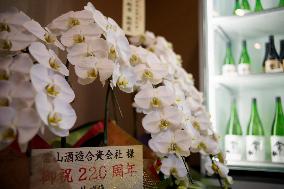
A flower basket marking the 220th anniversary of the establishment at Jozan Brewery in Fukui. Japanese alcoholic beverages, including sake (nihonshu), shochu and awamori, are made from grains and water. Craftspeople use koji mold to convert the starch in the ingredients into sugar, and oversee the process to make sure the mold grows in optimal conditions. Jozan, a brewery located in Fukui Prefecture, a region renowned for its high-quality rice, has upheld traditional sake-making for over 220 years. Led by Shinpei Tokoyama, the brewery exemplifies its ongoing efforts in coping with challenges in modern era while preserving traditional craftsmanship. With modern techniques, Jozan has realized a meticulous control over the brewing process, ensuring the consistency of product quality without compromising the essence of traditional making methods. In 2017, Jozan also renovated its brewing space, combining functionality with modern design to accommodate both production needs and visitors from around the world. The

  •  
Sake Making At Jozan Brewery In Fukui - Japan

Sake Making At Jozan Brewery In Fukui - Japan

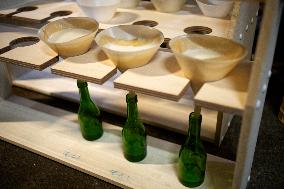
Samples of fresh sake are pictured at Jozan Brewery in Fukui. Japanese alcoholic beverages, including sake (nihonshu), shochu and awamori, are made from grains and water. Craftspeople use koji mold to convert the starch in the ingredients into sugar, and oversee the process to make sure the mold grows in optimal conditions. Jozan, a brewery located in Fukui Prefecture, a region renowned for its high-quality rice, has upheld traditional sake-making for over 220 years. Led by Shinpei Tokoyama, the brewery exemplifies its ongoing efforts in coping with challenges in modern era while preserving traditional craftsmanship. With modern techniques, Jozan has realized a meticulous control over the brewing process, ensuring the consistency of product quality without compromising the essence of traditional making methods. In 2017, Jozan also renovated its brewing space, combining functionality with modern design to accommodate both production needs and visitors from around the world. The United Nations Educational, Scie

  •  
Sake Making At Jozan Brewery In Fukui - Japan

Sake Making At Jozan Brewery In Fukui - Japan

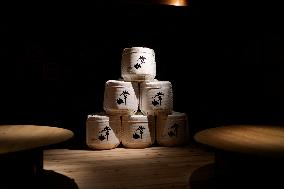
Trademarks of Jozan Brewery are pictured at the reception area of the brewery in Fukui. Japanese alcoholic beverages, including sake (nihonshu), shochu and awamori, are made from grains and water. Craftspeople use koji mold to convert the starch in the ingredients into sugar, and oversee the process to make sure the mold grows in optimal conditions. Jozan, a brewery located in Fukui Prefecture, a region renowned for its high-quality rice, has upheld traditional sake-making for over 220 years. Led by Shinpei Tokoyama, the brewery exemplifies its ongoing efforts in coping with challenges in modern era while preserving traditional craftsmanship. With modern techniques, Jozan has realized a meticulous control over the brewing process, ensuring the consistency of product quality without compromising the essence of traditional making methods. In 2017, Jozan also renovated its brewing space, combining functionality with modern design to accommodate both production needs and visitors from around the world. The United

  •  
Sake Making At Jozan Brewery In Fukui - Japan

Sake Making At Jozan Brewery In Fukui - Japan

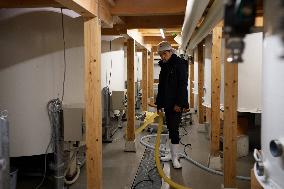
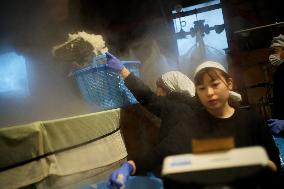
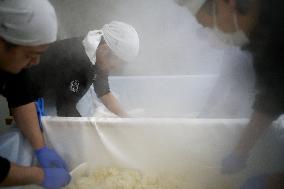
Cleaned rice is steamed at Jozan Brewery in Fukui. Japanese alcoholic beverages, including sake (nihonshu), shochu and awamori, are made from grains and water. Craftspeople use koji mold to convert the starch in the ingredients into sugar, and oversee the process to make sure the mold grows in optimal conditions. Jozan, a brewery located in Fukui Prefecture, a region renowned for its high-quality rice, has upheld traditional sake-making for over 220 years. Led by Shinpei Tokoyama, the brewery exemplifies its ongoing efforts in coping with challenges in modern era while preserving traditional craftsmanship. With modern techniques, Jozan has realized a meticulous control over the brewing process, ensuring the consistency of product quality without compromising the essence of traditional making methods. In 2017, Jozan also renovated its brewing space, combining functionality with modern design to accommodate both production needs and visitors from around the world. The United Nations Educational, Scientific and

  •  
Sake Making At Jozan Brewery In Fukui - Japan

Sake Making At Jozan Brewery In Fukui - Japan

Shinpei Tokoyama waits for moromi to flow into the filter at Jozan Brewery in Fukui. Japanese alcoholic beverages, including sake (nihonshu), shochu and awamori, are made from grains and water. Craftspeople use koji mold to convert the starch in the ingredients into sugar, and oversee the process to make sure the mold grows in optimal conditions. Jozan, a brewery located in Fukui Prefecture, a region renowned for its high-quality rice, has upheld traditional sake-making for over 220 years. Led by Shinpei Tokoyama, the brewery exemplifies its ongoing efforts in coping with challenges in modern era while preserving traditional craftsmanship. With modern techniques, Jozan has realized a meticulous control over the brewing process, ensuring the consistency of product quality without compromising the essence of traditional making methods. In 2017, Jozan also renovated its brewing space, combining functionality with modern design to accommodate both production needs and visitors from around the world. The United Na

  •  
Sake Making At Jozan Brewery In Fukui - Japan

Sake Making At Jozan Brewery In Fukui - Japan

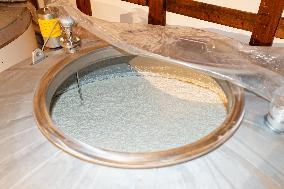
Fermenting moromi is pictured at Jozan Brewery in Fukui. Japanese alcoholic beverages, including sake (nihonshu), shochu and awamori, are made from grains and water. Craftspeople use koji mold to convert the starch in the ingredients into sugar, and oversee the process to make sure the mold grows in optimal conditions. Jozan, a brewery located in Fukui Prefecture, a region renowned for its high-quality rice, has upheld traditional sake-making for over 220 years. Led by Shinpei Tokoyama, the brewery exemplifies its ongoing efforts in coping with challenges in modern era while preserving traditional craftsmanship. With modern techniques, Jozan has realized a meticulous control over the brewing process, ensuring the consistency of product quality without compromising the essence of traditional making methods. In 2017, Jozan also renovated its brewing space, combining functionality with modern design to accommodate both production needs and visitors from around the world. The United Nations Educational, Scientifi

  •  
Sake Making At Jozan Brewery In Fukui - Japan

Sake Making At Jozan Brewery In Fukui - Japan

A worker seals a bottle of sake at Jozan Brewery in Fukui. Japanese alcoholic beverages, including sake (nihonshu), shochu and awamori, are made from grains and water. Craftspeople use koji mold to convert the starch in the ingredients into sugar, and oversee the process to make sure the mold grows in optimal conditions. Jozan, a brewery located in Fukui Prefecture, a region renowned for its high-quality rice, has upheld traditional sake-making for over 220 years. Led by Shinpei Tokoyama, the brewery exemplifies its ongoing efforts in coping with challenges in modern era while preserving traditional craftsmanship. With modern techniques, Jozan has realized a meticulous control over the brewing process, ensuring the consistency of product quality without compromising the essence of traditional making methods. In 2017, Jozan also renovated its brewing space, combining functionality with modern design to accommodate both production needs and visitors from around the world. The United Nations Educational, Scienti

  •  
Sake Making At Jozan Brewery In Fukui - Japan

Sake Making At Jozan Brewery In Fukui - Japan

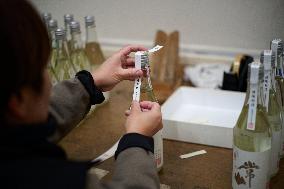
A worker examines samples of fresh sake at Jozan Brewery in Fukui. Japanese alcoholic beverages, including sake (nihonshu), shochu and awamori, are made from grains and water. Craftspeople use koji mold to convert the starch in the ingredients into sugar, and oversee the process to make sure the mold grows in optimal conditions. Jozan, a brewery located in Fukui Prefecture, a region renowned for its high-quality rice, has upheld traditional sake-making for over 220 years. Led by Shinpei Tokoyama, the brewery exemplifies its ongoing efforts in coping with challenges in modern era while preserving traditional craftsmanship. With modern techniques, Jozan has realized a meticulous control over the brewing process, ensuring the consistency of product quality without compromising the essence of traditional making methods. In 2017, Jozan also renovated its brewing space, combining functionality with modern design to accommodate both production needs and visitors from around the world. The United Nations Educational,

  •  
Sake Making At Jozan Brewery In Fukui - Japan

Sake Making At Jozan Brewery In Fukui - Japan

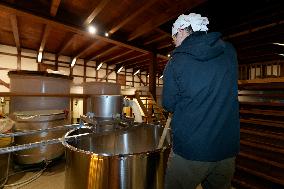
A worker stirs the mixture of steamed rice, koji, water and Shubo at Jozan Brewery in Fukui. Japanese alcoholic beverages, including sake (nihonshu), shochu and awamori, are made from grains and water. Craftspeople use koji mold to convert the starch in the ingredients into sugar, and oversee the process to make sure the mold grows in optimal conditions. Jozan, a brewery located in Fukui Prefecture, a region renowned for its high-quality rice, has upheld traditional sake-making for over 220 years. Led by Shinpei Tokoyama, the brewery exemplifies its ongoing efforts in coping with challenges in modern era while preserving traditional craftsmanship. With modern techniques, Jozan has realized a meticulous control over the brewing process, ensuring the consistency of product quality without compromising the essence of traditional making methods. In 2017, Jozan also renovated its brewing space, combining functionality with modern design to accommodate both production needs and visitors from around the world. The U

  •  
Sake Making At Jozan Brewery In Fukui - Japan

Sake Making At Jozan Brewery In Fukui - Japan

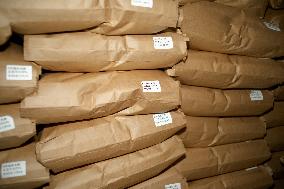
Bags of locally produced rice, a raw material for sake-making, is seen at Jozan Brewery in Fukui. Japanese alcoholic beverages, including sake (nihonshu), shochu and awamori, are made from grains and water. Craftspeople use koji mold to convert the starch in the ingredients into sugar, and oversee the process to make sure the mold grows in optimal conditions. Jozan, a brewery located in Fukui Prefecture, a region renowned for its high-quality rice, has upheld traditional sake-making for over 220 years. Led by Shinpei Tokoyama, the brewery exemplifies its ongoing efforts in coping with challenges in modern era while preserving traditional craftsmanship. With modern techniques, Jozan has realized a meticulous control over the brewing process, ensuring the consistency of product quality without compromising the essence of traditional making methods. In 2017, Jozan also renovated its brewing space, combining functionality with modern design to accommodate both production needs and visitors from around the world.

  •  
Sake Making At Jozan Brewery In Fukui - Japan

Sake Making At Jozan Brewery In Fukui - Japan

Workers weigh steamed rice at Jozan Brewery in Fukui. Japanese alcoholic beverages, including sake (nihonshu), shochu and awamori, are made from grains and water. Craftspeople use koji mold to convert the starch in the ingredients into sugar, and oversee the process to make sure the mold grows in optimal conditions. Jozan, a brewery located in Fukui Prefecture, a region renowned for its high-quality rice, has upheld traditional sake-making for over 220 years. Led by Shinpei Tokoyama, the brewery exemplifies its ongoing efforts in coping with challenges in modern era while preserving traditional craftsmanship. With modern techniques, Jozan has realized a meticulous control over the brewing process, ensuring the consistency of product quality without compromising the essence of traditional making methods. In 2017, Jozan also renovated its brewing space, combining functionality with modern design to accommodate both production needs and visitors from around the world. The United Nations Educational, Scientific a

  •  
Sake Making At Jozan Brewery In Fukui - Japan

Sake Making At Jozan Brewery In Fukui - Japan

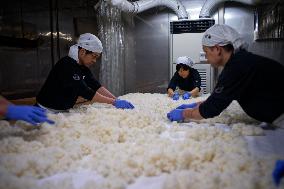
Shinpei Tokoyama (L) and workers spread steamed rice mixed with koji mold at Jozan Brewery in Fukui. Japanese alcoholic beverages, including sake (nihonshu), shochu and awamori, are made from grains and water. Craftspeople use koji mold to convert the starch in the ingredients into sugar, and oversee the process to make sure the mold grows in optimal conditions. Jozan, a brewery located in Fukui Prefecture, a region renowned for its high-quality rice, has upheld traditional sake-making for over 220 years. Led by Shinpei Tokoyama, the brewery exemplifies its ongoing efforts in coping with challenges in modern era while preserving traditional craftsmanship. With modern techniques, Jozan has realized a meticulous control over the brewing process, ensuring the consistency of product quality without compromising the essence of traditional making methods. In 2017, Jozan also renovated its brewing space, combining functionality with modern design to accommodate both production needs and visitors from around the worl

  •  
Sake Making At Jozan Brewery In Fukui - Japan

Sake Making At Jozan Brewery In Fukui - Japan

Shinpei Tokoyama (2nd L) and workers spread koji mold over steamed rice at Jozan Brewery in Fukui. Japanese alcoholic beverages, including sake (nihonshu), shochu and awamori, are made from grains and water. Craftspeople use koji mold to convert the starch in the ingredients into sugar, and oversee the process to make sure the mold grows in optimal conditions. Jozan, a brewery located in Fukui Prefecture, a region renowned for its high-quality rice, has upheld traditional sake-making for over 220 years. Led by Shinpei Tokoyama, the brewery exemplifies its ongoing efforts in coping with challenges in modern era while preserving traditional craftsmanship. With modern techniques, Jozan has realized a meticulous control over the brewing process, ensuring the consistency of product quality without compromising the essence of traditional making methods. In 2017, Jozan also renovated its brewing space, combining functionality with modern design to accommodate both production needs and visitors from around the world.

  •  
Nestle Waters Faces Perrier Production Stoppage

Nestle Waters Faces Perrier Production Stoppage

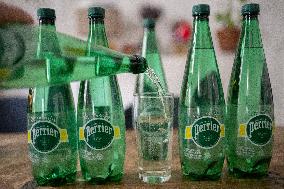
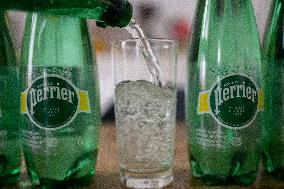
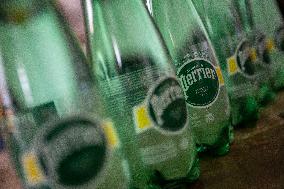
This photo shows bottles of Perrier in Paris, France on December 17, 2024. “The most famous sparkling water brand is under threat of losing its natural mineral water label, which has made its reputation for over a century,” said the French daily Le Monde. The newspaper added that “a confidential report from the Occitanie regional health agency (ARS) leaves little room for any other outcome” and that the “blow could be fatal for Perrier”. Following an inspection carried out at the end of May at Perrier’s only packaging site in the Gard region, the state agency says that Nestlé Waters, the brand’s owner, should seriously consider “stopping production of mineral water at the Vergèze site”, due to the regularly degraded sanitary quality of its catchments and, in particular, a virological risk. Photo by Eliot Blondet/ABACAPRESS.COM

  •  
Nestle Waters Faces Perrier Production Stoppage

Nestle Waters Faces Perrier Production Stoppage

This photo shows bottles of Perrier in Paris, France on December 17, 2024. “The most famous sparkling water brand is under threat of losing its natural mineral water label, which has made its reputation for over a century,” said the French daily Le Monde. The newspaper added that “a confidential report from the Occitanie regional health agency (ARS) leaves little room for any other outcome” and that the “blow could be fatal for Perrier”. Following an inspection carried out at the end of May at Perrier’s only packaging site in the Gard region, the state agency says that Nestlé Waters, the brand’s owner, should seriously consider “stopping production of mineral water at the Vergèze site”, due to the regularly degraded sanitary quality of its catchments and, in particular, a virological risk. Photo by Eliot Blondet/ABACAPRESS.COM

  •  
Nestle Waters Faces Perrier Production Stoppage

Nestle Waters Faces Perrier Production Stoppage

This photo shows bottles of Perrier in Paris, France on December 17, 2024. “The most famous sparkling water brand is under threat of losing its natural mineral water label, which has made its reputation for over a century,” said the French daily Le Monde. The newspaper added that “a confidential report from the Occitanie regional health agency (ARS) leaves little room for any other outcome” and that the “blow could be fatal for Perrier”. Following an inspection carried out at the end of May at Perrier’s only packaging site in the Gard region, the state agency says that Nestlé Waters, the brand’s owner, should seriously consider “stopping production of mineral water at the Vergèze site”, due to the regularly degraded sanitary quality of its catchments and, in particular, a virological risk. Photo by Eliot Blondet/ABACAPRESS.COM

  •  
Nestle Waters Faces Perrier Production Stoppage

Nestle Waters Faces Perrier Production Stoppage

This photo shows bottles of Perrier in Paris, France on December 17, 2024. “The most famous sparkling water brand is under threat of losing its natural mineral water label, which has made its reputation for over a century,” said the French daily Le Monde. The newspaper added that “a confidential report from the Occitanie regional health agency (ARS) leaves little room for any other outcome” and that the “blow could be fatal for Perrier”. Following an inspection carried out at the end of May at Perrier’s only packaging site in the Gard region, the state agency says that Nestlé Waters, the brand’s owner, should seriously consider “stopping production of mineral water at the Vergèze site”, due to the regularly degraded sanitary quality of its catchments and, in particular, a virological risk. Photo by Eliot Blondet/ABACAPRESS.COM

  •  
Nestle Waters Faces Perrier Production Stoppage

Nestle Waters Faces Perrier Production Stoppage

This photo shows bottles of Perrier in Paris, France on December 17, 2024. “The most famous sparkling water brand is under threat of losing its natural mineral water label, which has made its reputation for over a century,” said the French daily Le Monde. The newspaper added that “a confidential report from the Occitanie regional health agency (ARS) leaves little room for any other outcome” and that the “blow could be fatal for Perrier”. Following an inspection carried out at the end of May at Perrier’s only packaging site in the Gard region, the state agency says that Nestlé Waters, the brand’s owner, should seriously consider “stopping production of mineral water at the Vergèze site”, due to the regularly degraded sanitary quality of its catchments and, in particular, a virological risk. Photo by Eliot Blondet/ABACAPRESS.COM

  • Main
  • Top
  • Editorial
  • Creative
  • About Us
  • About ILG
  • Terms of use
  • Company
  • BEHIND
  • Price List
  • Single Plan
  • Monthly Plan
  • Services
  • Shooting
  • Rights Clearance
  • Support
  • FAQ
  • How To Buy
  • Contact Us
  • Become a Partner

© KYODO NEWS IMAGES INC

All Rights Reserved.

  • Editorial
  • Olympics
  • News
  • Sports
  • Japan
  • Tech
  • Royal
  • Disaster
  • NorthKorea
  • Old Japan
  • SNS
  • Creative
  • Food
  • Japan
  • Landscape
  • Animal
  • Popular
  • #Ukraine
  • #China
  • #coronavirus
  • #N. Korea
  • #Russia
  • #Thailand
  • #Ukraine
  • #China
  • #coronavirus
  • #N. Korea
  • #Russia
  • #Thailand
  • Food
  • Japan
  • Landscape
  • Animal
  • Olympics
  • News
  • Sports
  • Japan
  • Tech
  • Royal
  • Disaster
  • NorthKorea
  • Old Japan
  • SNS